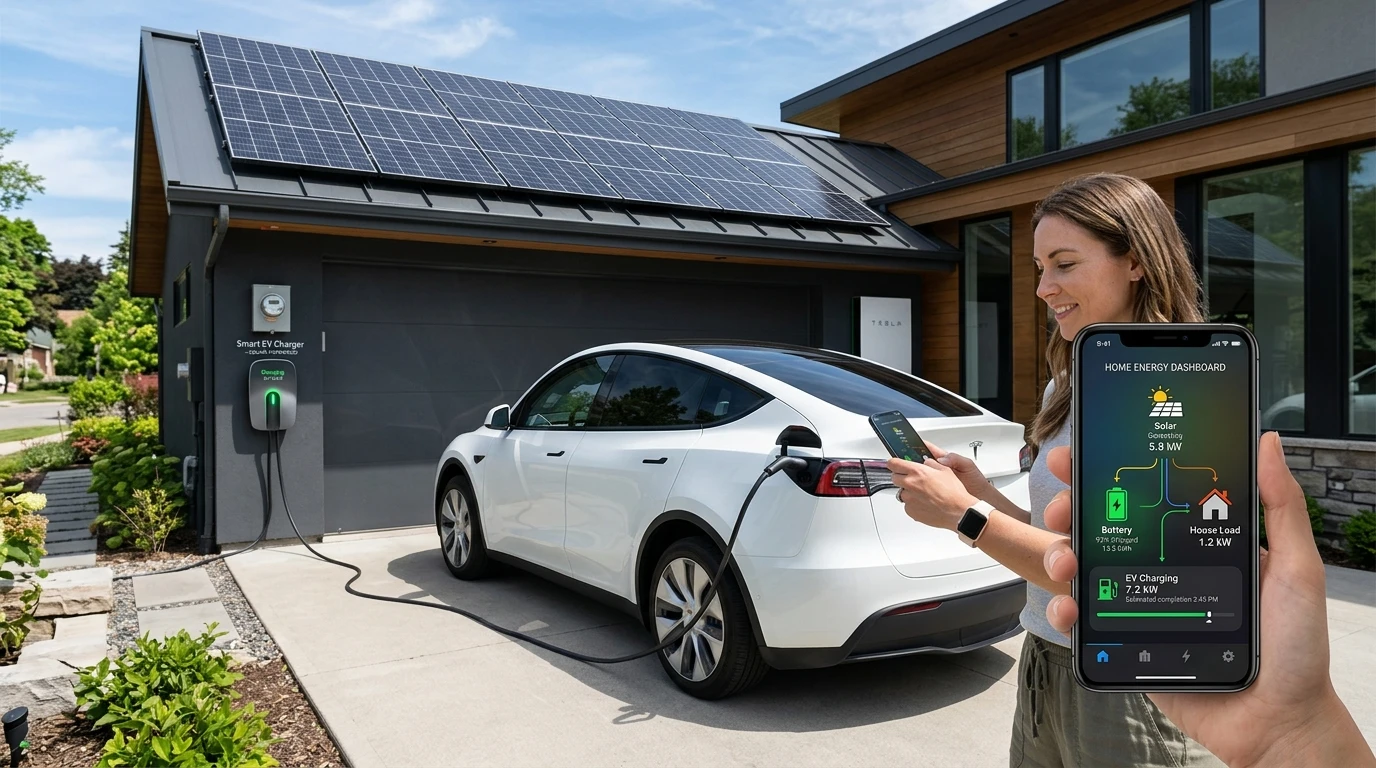
The Rise of Intelligent Energy Management
Traditional solar setups operate passively: panels generate DC electricity, an inverter converts it to AC, and any unconsumed power spills indiscriminately back onto the grid at low fixed feed-in rates.
A Smart Energy Management System (HEMS) transforms your installation into an active, automated micro-power plant. By connecting smart inverters, home batteries, EV chargers, thermal diverters, and heat pumps to real-time wholesale energy price signals, homeowners can routinely achieve net-zero electricity bills and even monetize their export capacity.
Dynamic & Agile Tariffs (Wholesale Price Tracking)
Modern energy suppliers offer half-hourly dynamic tariffs (such as Octopus Agile in the UK, Tibber across Europe, and Amber Electric in Australia) that update energy import and export prices every 30 minutes based on wholesale spot market auction data:
- Negative Pricing Events: During high-wind or peak solar grid hours, wholesale prices occasionally plunge below zero—effectively paying consumers to charge batteries or run heavy loads.
- Evening Peak Export Spikes: Between 4 PM and 7 PM when grid demand peaks, export rates can surge to 3x–5x baseline rates. Smart systems automatically discharge stored battery capacity to capture premium revenue.
Solar Hot Water Diverters & Immersion Heating
Heating domestic hot water represents 15% to 25% of household energy demand. Smart diverters (e.g., Myenergi Eddi, SolarEdge Immersion Controller) monitor surplus solar generation in real time using Current Transformer (CT) clamps:
- Micro-Modulation: Rather than drawing massive surges from the grid, smart diverters pulse exact excess wattage (from as low as 50W up to 3kW) directly into your domestic hot water immersion heater.
- Zero Waste: Every stray kilowatt-hour of sunlight that would otherwise export at baseline rates is converted into thermal storage, reducing boiler gas or grid electricity consumption.
EV Solar Charging & Automated Load Shifting
Electric vehicle battery packs (50 kWh to 100+ kWh) provide enormous energy flexibility:
- Solar-Only (Eco+) Charging: Smart EV chargers monitor roof production and dynamically adjust charging current (from 6A to 32A, single or three-phase) to match solar generation precisely without pulling power from the grid.
- Scheduled Overnight Top-Ups: If bad weather is forecast tomorrow, automated charging schedules automatically top up the EV battery during off-peak overnight tariff windows.
Heat Pump Optimization & Thermal Mass Pre-Heating
Air-source and ground-source heat pumps can be integrated with PV systems via SG-Ready (Smart Grid Ready) relay interfaces:
- Solar Thermal Buffering: When solar production exceeds household base load, the inverter triggers the heat pump to elevate indoor setpoints by 1°C–2°C and overheat the hot water cylinder.
- Thermal Battery Effect: The home's underfloor heating screed and building fabric store the excess heat during peak daylight, allowing the heat pump to idle during expensive evening peak hours.
Home Assistant, Modbus & Local-First Automation
For advanced users seeking vendor-agnostic control, open-source platforms like Home Assistant provide complete local automation without cloud dependencies:
- Direct Hardware Telemetry via Modbus / SunSpec: Connect directly to hybrid inverters (FoxESS, GivEnergy, SolarEdge, Sungrow, Deye, Victron) over RS485 or local TCP to read real-time voltage, string currents, and battery State of Charge (SOC) with sub-second latency.
- Predictive AI Solar Forecasting: Integrations like Solcast and EMHASS (Energy Management for Home Assistant) utilize localized satellite cloud-cover forecasts and consumption history to compute optimal linear programming charge/discharge schedules 24 hours in advance.