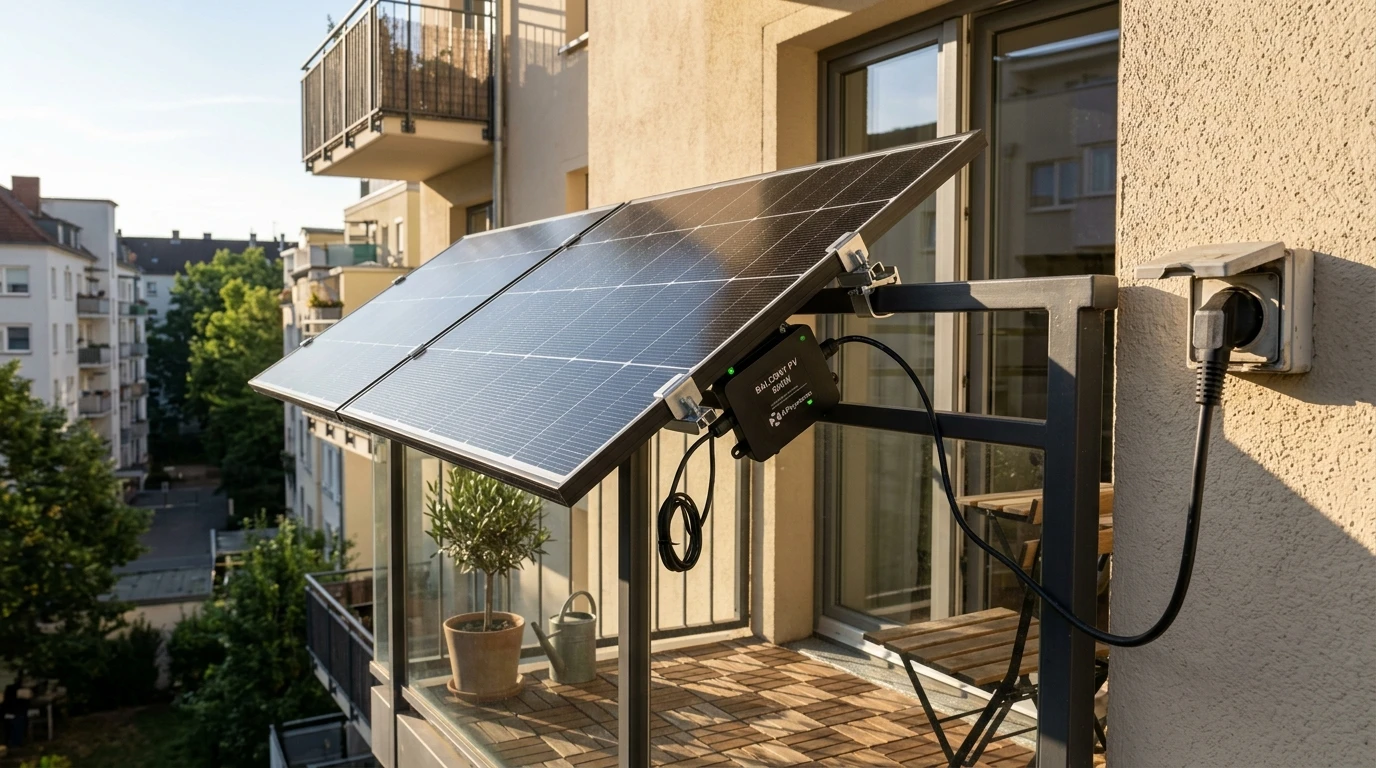
What is Plug-in Solar (Balcony PV)?
Plug-in solar—widely known across Europe as Balkonkraftwerk or balcony solar—consists of two to four photovoltaic panels paired with a compact microinverter and an optional inline DC battery that connects directly into a domestic circuit. Designed for apartments, renters, terraced homes, garden pergolas, and flat garages, these systems deliver 300W to 800W of regulated AC power with zero roof penetrations or scaffolding.
The 2026 Evolution: Smart Balcony Batteries & Dynamic Baseload Matching
Early plug-in solar kits suffered from a simple limitation: if your panels produced 700W at 1:00 PM while your apartment only used 150W for a fridge and Wi-Fi router, the remaining 550W spilled out to the street grid for free.
In 2026, Smart Balcony Storage Systems have transformed compact PV economics:
- Inline DC MPPT Storage (2 kWh – 4 kWh LFP): Weatherproof IP65 LiFePO4 battery packs connect between your solar panels and the microinverter in 5 minutes via plug-and-play MC4 cables.
- Dynamic Zero-Waste Baseload Tracking: Paired with a wireless CT clamp or smart plug meter, the battery releases exact wattage (from 100W to 800W) into your home circuit throughout the evening and night—increasing self-consumption from 40% to over 90%.
- Anti-Islanding Safety Compliance: Certified microinverters feature dual redundant relays compliant with EN 50549-1 / VDE-AR-N 4105, guaranteeing that the AC plug de-energizes within milliseconds if unplugged or during a grid outage.
Learn More & Explore Technical Resources
For in-depth community guides, mounting hardware reviews, and installation best practices:
- Explore the comprehensive Solar Energy Advantages Blog for detailed articles on the advantages of solar energy, microinverter efficiency, and compact solar power solutions.
- Browse our core guides on Solar Basics, Smart Home & Tariff Automation, and Battery Storage Analysis.
- Contact our editorial and research desk at hello@think-solar-power.com.