Functional Independence vs. Storage Economics
A grid-tied solar array functions completely without a battery: generated electricity flows directly to active household loads, and surplus electricity is instantly exported to the grid.
The Case for Modern LiFePO4 (LFP) Batteries
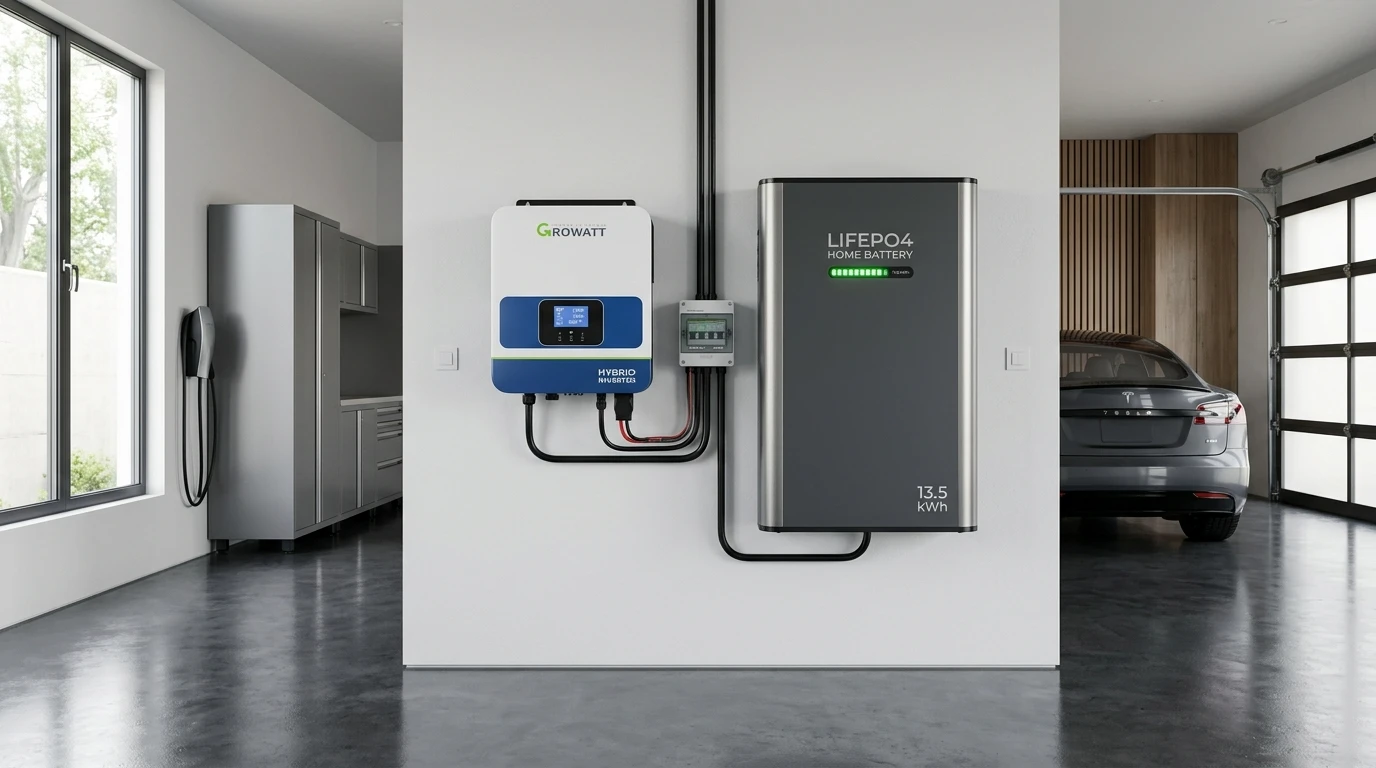
Most new residential installations now include battery storage (typically 5 kWh to 15 kWh) for key operational advantages:
- Shifting Daytime Sunlight to Night: Average households without batteries self-consume only 30–40% of their solar production. Adding storage boosts self-consumption to 75–90%.
- Smart Tariff Arbitrage: In winter or low-sunlight periods, smart batteries can charge from the grid during ultra-cheap off-peak hours (e.g., overnight EV/agile tariffs) and discharge during expensive daytime peak hours.
- LiFePO4 Chemistry Safety & Longevity: Modern Lithium Iron Phosphate cells offer superior thermal stability and deliver 6,000+ charge cycles—equating to 15+ years of daily cycling with minimal capacity degradation.
- Emergency Power Supply (EPS): With an automatic transfer switch, selected emergency circuits remain energized during power outages.
The Decision Matrix
If your daytime electricity load is already high (e.g., working from home with continuous baseline loads) and export rates are high, a solar-only system delivers fast payback. For maximum grid independence and bill predictability, solar + LFP storage offers superior long-term value.